


Most paint calculators stop at square feet, leaving you guessing how much paint you really need. But the truth is, walls with patches, old plaster, and uneven surfaces soak up paint differently. When you factor in surface prep, primer coverage, and wall condition, the numbers change—and so does your budget. Let’s look at how a smarter interior paint calculator can save you time, money, and frustration on your next project. For a more accurate estimation, check out this guide.
Rethinking the Paint Calculator
Imagine not having to second-guess your paint purchase. With a more comprehensive paint calculator approach, you can do just that. It’s not just about square footage; it’s about the surfaces you’re working with.
Beyond Square Footage Estimates
When you think about calculating paint, square feet may be the first thing that comes to mind. But, have you ever considered why two rooms of the same size can require different amounts of paint? It’s not just about the area. Factors like the type of wall and its current condition play a significant role.
Older homes often have walls that are not just thirsty but uneven. The surface texture affects how paint spreads, which impacts how much you need. While measuring the walls gives you a baseline, it doesn’t account for these crucial aspects. For more tips on paint coverage, visit Painter Pro.
Importance of Surface Prep
Preparation is key. A smooth, properly prepped surface ensures the paint adheres correctly, reducing the likelihood of needing extra coats. If you skip this step, your project might demand more paint than anticipated.
Surface prep involves more than just cleaning. You might need to patch holes, sand rough spots, or apply primer. Each of these actions influences how the paint behaves once applied. Proper prep work can mean the difference between a one-coat wonder and a multi-layered headache.
Preparing for a Perfect Finish
Now that you know why preparation matters, let’s explore how to get it right. Understanding your wall’s condition can save you from costly mistakes and ensure a lasting finish.
Assessing Wall Condition
Before you even think about buying paint, take a closer look at your walls. Are there any cracks, stains, or buckles? These imperfections need attention before you start painting.
A wall in good condition will need less paint, while a problematic wall might soak up more. Addressing these issues, like patching holes or fixing cracks, ensures a uniform look once you apply the paint. For more on estimating paint needs accurately, check out this article.
Primer and Paint Compatibility
Choosing the right primer is just as crucial as selecting the paint itself. A good primer sets the stage for the paint to adhere properly, enhancing the final look. It also helps in covering dark colors or stains, making it easier for the paint to do its job.
Different surfaces require different types of primer. Whether it’s drywall, wood, or plaster, selecting the right one ensures optimal coverage and durability. Without a compatible primer, you might end up using more paint, which can be costly and time-consuming.
Expert Advice and Estimates
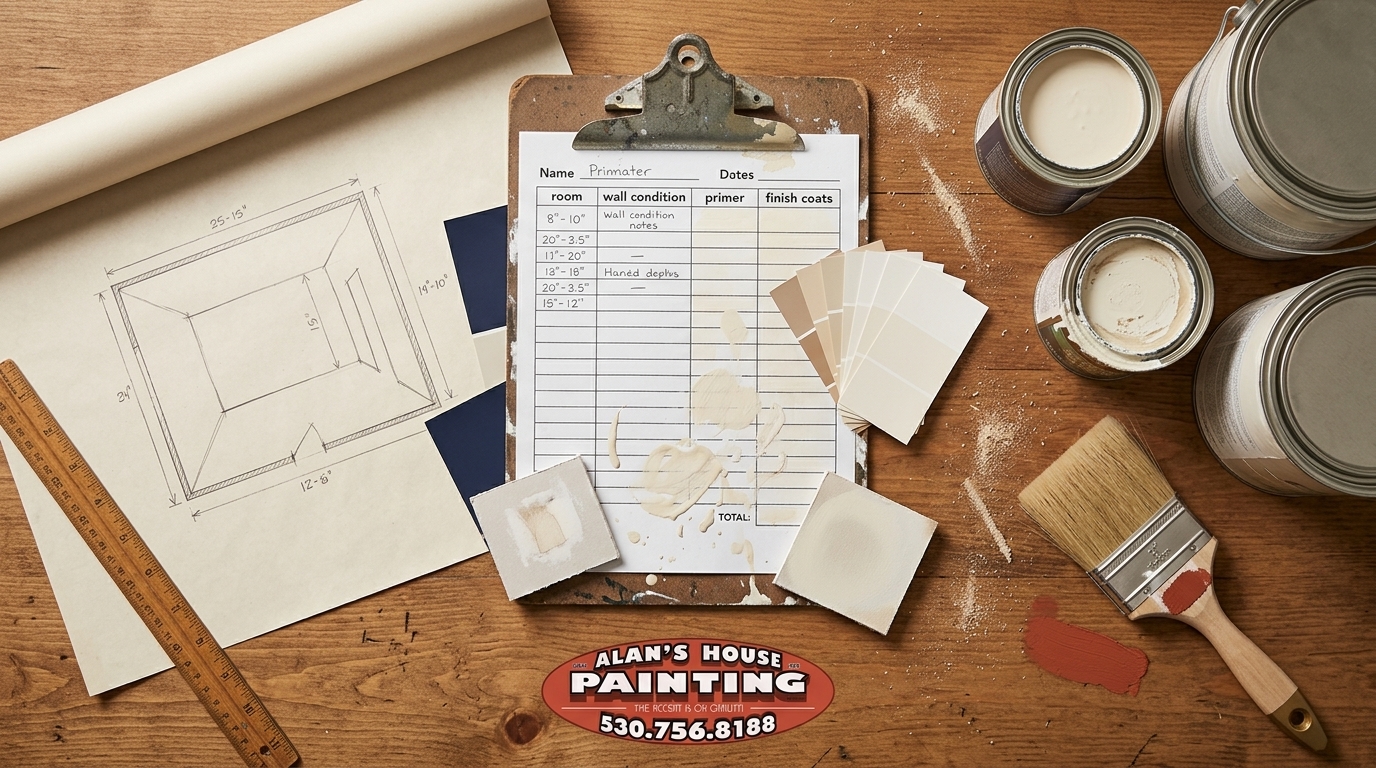
Feeling overwhelmed? You don’t have to tackle this alone. Expert advice can streamline your process and ensure you’re making informed choices.
Requesting a Free In-Home Estimate
Why guess when you can know? Getting a free in-home estimate from a professional can provide you with a tailored plan. Experts can assess wall conditions, suggest appropriate primer types, and offer accurate paint quantity estimates.
With precise measurements and professional insights, you’ll have a clearer understanding of your project’s scope. This service takes the guesswork out of the equation, ensuring you have just what you need without overbuying or running short. Consider a free estimate with Alan’s House Painting for personalized solutions.
Benefits of Professional Painting Services
Opting for professional services offers peace of mind. Professionals know the ins and outs of surface prep, paint application, and material selection. They bring years of expertise to ensure a flawless finish.
From start to finish, professional painters manage everything: preparation, application, and cleanup. This means less stress for you and a paint job that meets your expectations. Plus, with licensed and insured professionals, your project is in safe hands. For more insights, learn about the cost to paint a house interior.
Frequently Asked Questions
How do I estimate how much paint I need?
When estimating paint needs, start by measuring the area to be painted and consider the surface type. Remember to account for wall condition and whether you’ll use a primer, as these factors can affect the amount of paint required.
Is primer necessary before painting?
Primer is often necessary, especially on new, repaired, or heavily stained surfaces. It helps the paint adhere better and can improve the finish, reducing the number of coats needed.
Can I calculate paint needs without professional help?
Yes, you can calculate paint needs yourself by measuring your space and considering wall conditions. However, professional estimates provide accuracy and insights that can prevent overbuying or underestimating your paint requirements.


