
Apartment turnover painting is the repaint or touch-up done between one tenant moving out and the next moving in. Done well, it makes a unit look clean in listing photos, survives the next tenancy and can be repeated the same way next time. That takes three decisions: how much to repaint, what to specify, and who coordinates the work so the unit is not sitting empty. Property owners and managers in Davis and the Sacramento area bring us these projects, and we run them with a personal concierge who sends daily progress updates, careful prep and paint products specified up front.
TL;DR
- Touch up when the walls were painted within the last year and marks are minor and local. Repaint fully when paint is peeling or stained, damage is widespread, the color is changing or the paint is old.
- Prep decides how long the repaint lasts: clean, repair, sand glossy spots and prime stains before any finish coat goes on.
- Painting is a small slice of a turnover that averages roughly $4,000 per unit nationally, but it ranges from about $250 for touch-ups to $3,500 for a full repaint.
- Pick one neutral color, one sheen per surface and one product line, and label a touch-up kit for every unit.
- One accountable painting contact, with daily updates, keeps the schedule from slipping between trades.
Table of Contents
- Touch-up or full repaint: how to decide
- What turnover painting includes
- Prep is where a turnover repaint wins or fails
- What turnover painting costs
- Choosing paint and finishes that last through the next tenant
- Keeping results consistent across units and buildings
- Coordinating paint with the rest of the make-ready
- Have us handle your turnover painting
- A repeatable turnover routine
- FAQ
- Sources
Touch-up or full repaint: how to decide
The decision starts with how long the last tenant stayed and what the walls look like in daylight. BEHR PRO’s guidance says touch-ups fit when the unit was painted within the last year and damage is minor and localized. It says a full repaint is warranted for peeling, flaking or stained paint, widespread damage, a color change, paint over five years old, or highly visible flaws.
Tenancy length gives a second rule of thumb. DoorKeeping’s rental repaint guide suggests touching up a few marks after a tenancy of two years or less. It suggests repainting affected walls corner to corner when one or two walls are marked. It suggests a full repaint when more than about a quarter of the walls need work, occupancy ran about three years or longer, there is heavy smoke, or the color is unacceptable.
| What you see at move-out | Usual call |
|---|---|
| A few scuffs, nail holes, tenant stayed a year or two | Spot patch and touch up |
| Marks across one or two walls | Repaint those walls corner to corner |
| Peeling, stains that bleed through, yellowing | Prime and repaint fully |
| Smoke or heavy cooking residue | Prime and repaint fully |
| More than about a quarter of the walls need work | Repaint fully |
| Tenancy of three years or more | Repaint fully |
| New neutral color or mismatched patches | Repaint fully |
There is a middle path too. Repaint the kitchen, bathrooms, entry and main living space, where wear shows first, and touch up the bedrooms. Hand-marked walls, patch repairs and moving-day scuffs can leave a wall mottled even when the paint itself is not worn out, so judge by how the wall looks, not by the age of the coat.
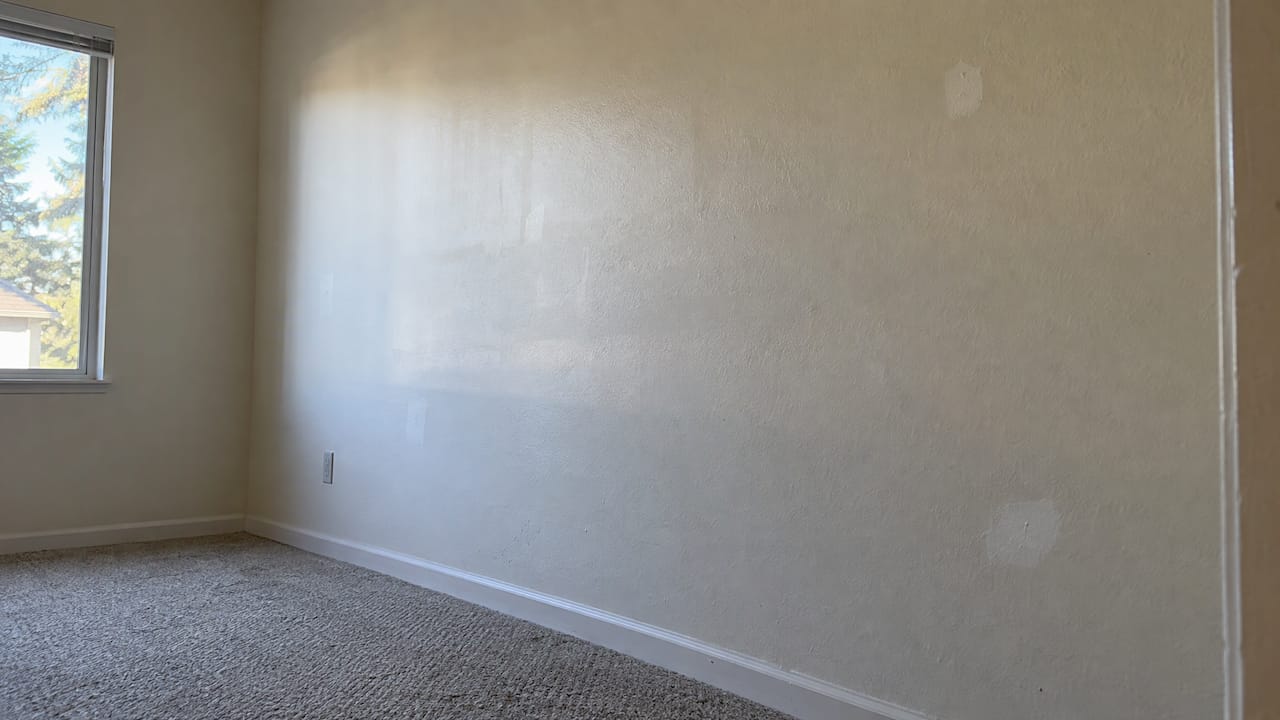
Walk the unit at the same time of day each turn, with the lights on and with the blinds open. Side light from a window shows roller marks, patches and sheen differences that overhead light hides. If you manage several units, take a photo of each wall in raking light so the repaint decision is documented, not remembered.
What turnover painting includes
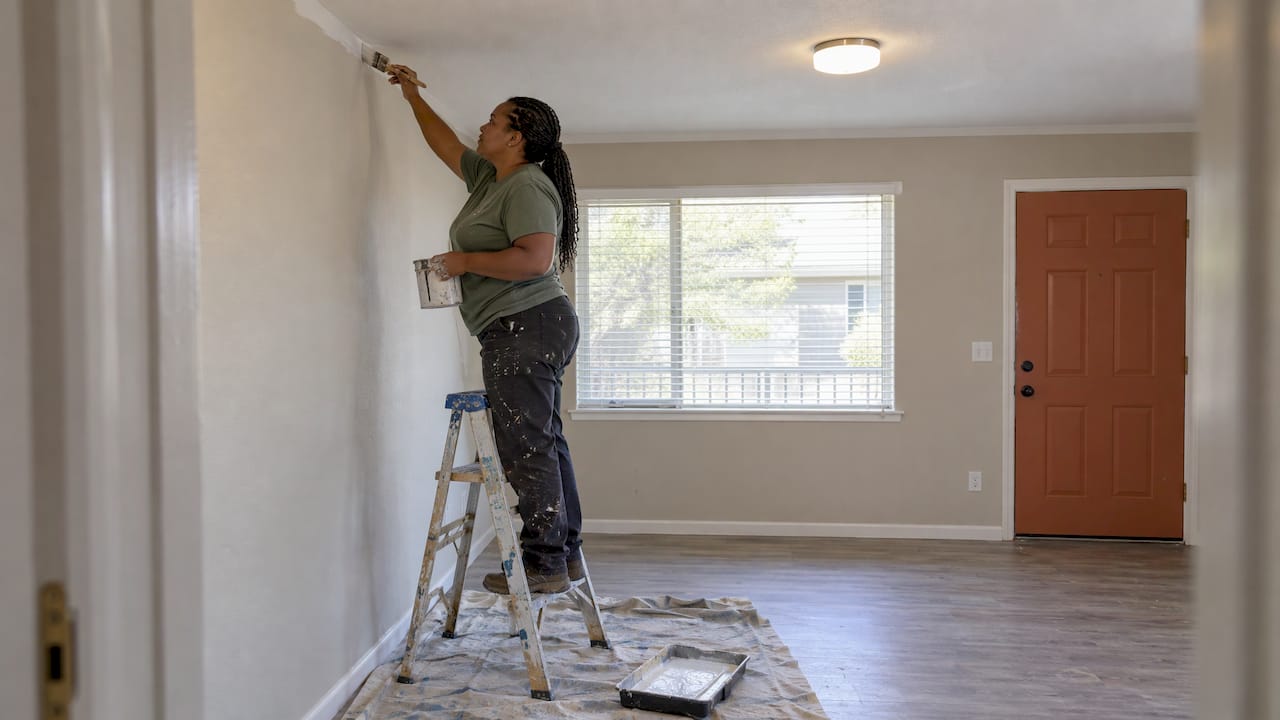
A turnover paint scope is shorter than a homeowner repaint, but it should still be written down so every unit is treated the same way. A typical scope covers:
- Walk-through and scope. Note what needs patching, what needs a full coat, and which rooms are in or out.
- Protection. Floors, fixtures and anything left in the unit are covered or masked.
- Repairs. Nail holes, small dents and cracks are filled and sanded flush. Larger drywall damage is repaired before paint, not painted over.
- Surface prep. Walls are cleaned, glossy areas are scuffed and stained spots are spot-primed.
- Paint. Ceilings first, then walls, then trim and doors, in the specified color and sheen.
- Touch-up and cleanup. Edges are checked, masking comes off, the unit is left ready for the cleaning crew and the final inspection.
If the unit also has worn kitchen cabinets, cabinet refinishing can be scoped into the same visit instead of replacing them. Wallpaper left by a prior tenant is a separate removal job and needs to be flagged at the walk-through, since it changes the schedule.
Prep is where a turnover repaint wins or fails
Speed pressure makes prep the first thing cut, and it is the thing that shows up as callbacks. Benjamin Moore’s wall preparation guide lays out the basics:
- Clean walls with warm water. Use a grease-cutting detergent solution on kitchen walls, then rinse and dry thoroughly.
- Treat mildew with a solution of 3 to 4 parts water to 1 part bleach before painting over it.
- Sand rough or previously glossy surfaces. Use fine grit for water-based paint and 100 to 150 grit for oil-based.
- Prime porous or stained surfaces so the finish coat dries uniformly.
In a turnover, the usual trouble spots are the kitchen wall behind the range, bathroom ceilings, the wall beside the entry door and any wall where furniture sat tight against it. Skipping the degreasing step on a kitchen wall is how new paint ends up beading or peeling within months. Skipping primer on stains is how a water ring or smoke mark returns through two coats.
Our approach is built around this stage: our painters focus on careful preparation, detail and respectful service in clients’ spaces. If you want to see how we describe the sequence, our walk-through of the painting phases that separate a quick repaint from a lasting one covers it step by step.
What turnover painting costs
Start with the whole turn, because painting is judged against it. RapidEye’s 2026 turnover statistics report an average apartment turnover cost of $3,872 per unit, with Zego’s research putting it at about $4,000. Within that, they put painting at $250 for touch-up work up to $3,500 for a full repaint of walls and ceilings. They also cite the National Apartment Association, which says a move-out can cost $1,000 to $5,000 depending on upgrades.
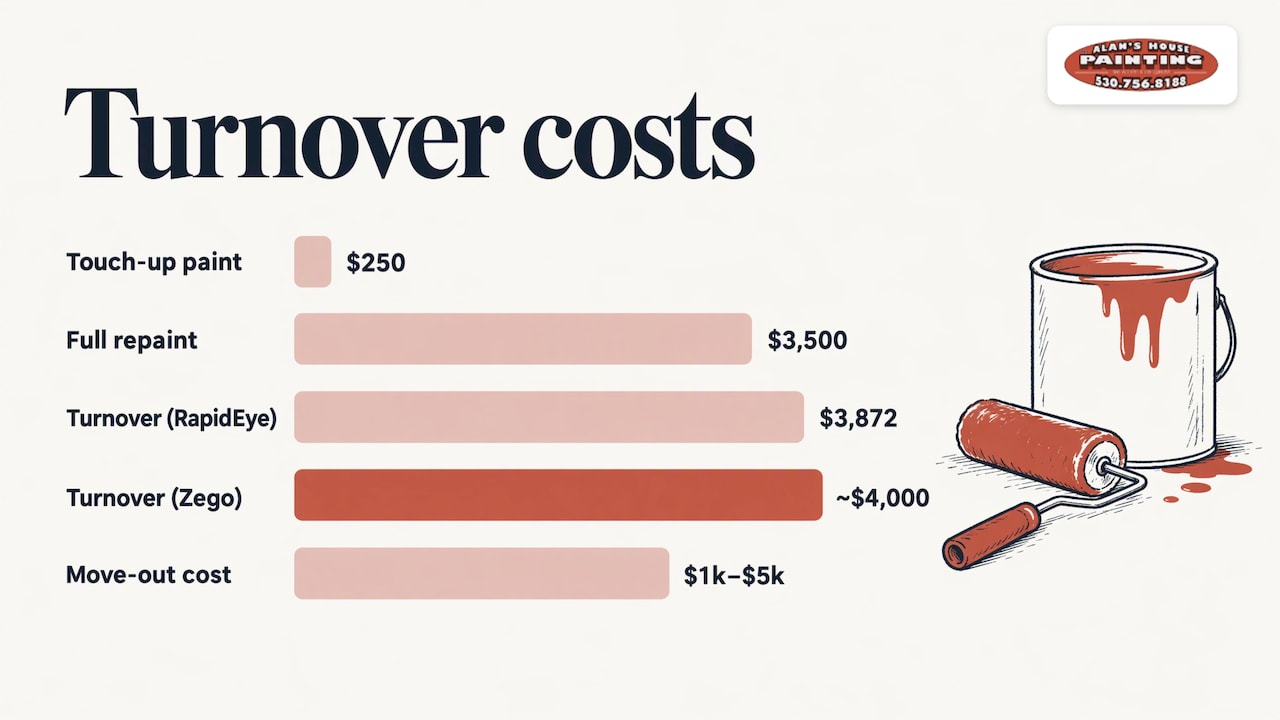
That spread is why the touch-up or repaint decision matters. A unit that needs a full repaint can cost many times what a touch-up costs, so repainting by habit when a touch-up would do wastes budget, and touching up by habit when a repaint is due leads to a mottled wall and a harder rent.
What moves a turnover estimate:
- Square footage and ceiling height. More wall area means more labor and more paint.
- Number of coats. One coat over the same color is faster than two coats over a color change or over stains.
- Patching and repairs. Tenant damage, anchors and cracked corners add hours before any paint goes on.
- Whether the unit is empty. Painting an empty unit is quicker than working around furniture.
- Paint quality. A premium washable product costs more up front and is meant to cut repaint frequency.
- Your metro. High-cost areas can run above national averages, so a national figure is a starting point, not a quote.
For reference, our published range for interior painting is $2,500 to $8,000 one-off, which covers full residential interior projects. Turnover scopes vary far more than that, so the practical route is a free estimate on the actual units. Interior and exterior projects, and what each includes, are described on our interior painting page.
Choosing paint and finishes that last through the next tenant
Rentals need paint that wipes clean and touches up without a visible patch. AOAUSA’s guidance on rental paint recommends:
- A light, standard neutral on the walls.
- Semi-gloss on cabinets, trim, doors, kitchens and bathrooms.
- Eggshell or satin on walls generally.
- A premium washable flat for walls, which touches up without flashing and wipes clean, at a 30 to 40 percent price premium over lower-grade paint.
The reasoning is that sheen changes as paint ages, so a touch-up from the original can show at raking angles. A washable flat is meant to hide the patch and tolerate scrubbing, which trades a higher upfront cost for fewer full repaints.
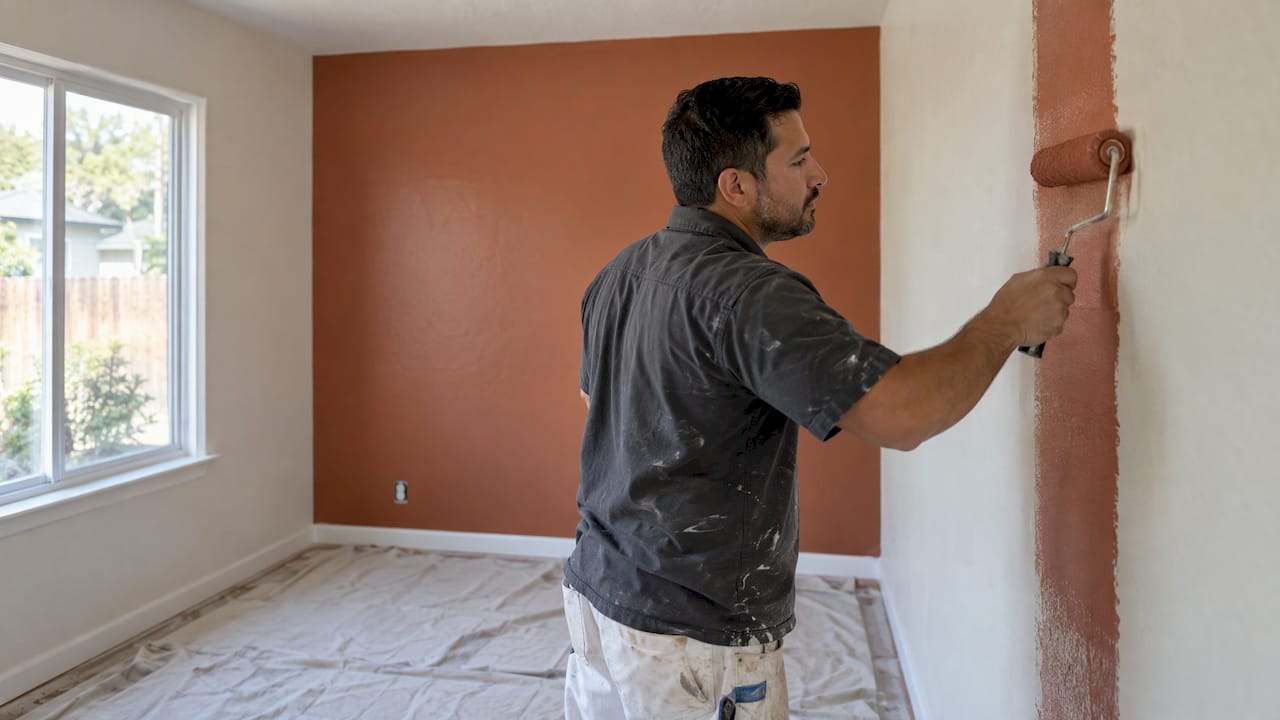
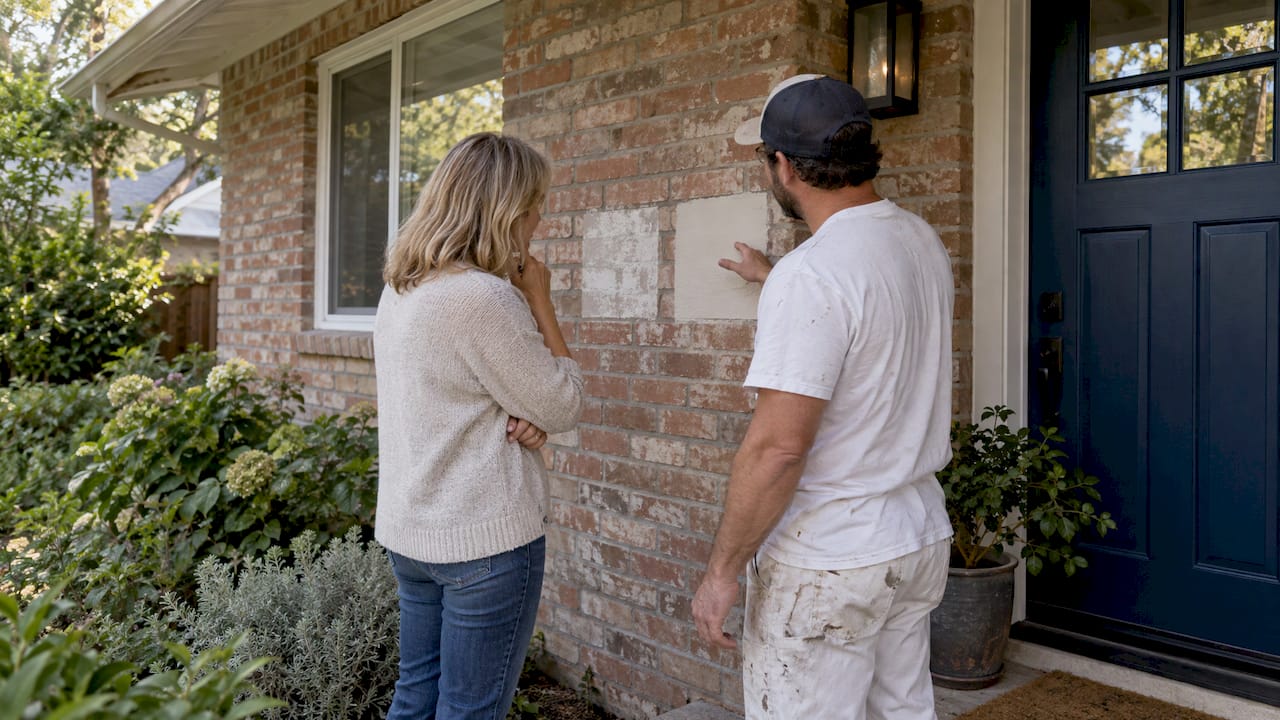
Color choice matters at the listing stage as much as the maintenance stage. A neutral that photographs well and suits any furniture shortens vacancy. If you are changing a dated or bold color, plan on a full repaint, and plan for coverage: our guide to painting over dark colors explains why a deep color needs primer and extra coats. Choosing the neutral itself is where color consulting helps, since the color needs to read as clean in both bright and dim rooms.
For common areas, lobbies and corridors, where scuffs build faster than inside units, we cover finish choices in durable paint finishes for high-traffic commercial areas.
Keeping results consistent across units and buildings
If you manage more than a few units, consistency is the real saving. A repaint that needs a color hunt every time is a repaint that costs a day of delay. The practical specification is short:
- One neutral wall color across the property, or across the portfolio.
- One sheen per surface type: for example, one for walls, one for trim and doors, one for ceilings.
- One product line, so the same formula is used from unit to unit.
- A labeled touch-up kit for each unit: sealed wall, trim and ceiling paint marked with color, product line, sheen and date, plus a brush, mini roller and filler. This follows Paint Pricing’s turnover guide.
Put that specification in writing and attach it to every work order. Then a new maintenance hire, a new painter or a new owner can pick up the file and get the same result. It also makes estimates comparable, because every bid is for the same product and sheen.
Coordinating paint with the rest of the make-ready
Painting sits in the middle of the turn. Repairs and drywall come before it, flooring work and deep cleaning come after it, and the final inspection comes last. The delays rarely come from the painting itself. They come from the gaps: a repair that is not finished when the painter arrives, a cleaner who cannot start because masking is still up, or nobody who knows which unit is ready.
A sensible order for each unit:
- Inspection and scope, with photos.
- Junk removal and any drywall or carpentry repair.
- Painting: ceilings, walls, then trim and doors.
- Flooring touch-ups and deep cleaning.
- Final walk-through, with the touch-up kit left in the unit.
Have paint and materials confirmed before keys come back, and decide in advance who signs off that a unit is ready for the next trade. This is where a single point of contact earns its keep. We coordinate projects through a personal concierge who provides daily progress updates, so you can see which units are done and which are next without chasing anyone. For managers juggling several vacancies at once, that is often the difference between a unit that rents on time and one that waits.
If you want a unit left in cleaner condition, it also helps to clear any belongings and tell the crew what stays. Our guide to preparing your home for professional painters lists what to move and cover, and it applies to an occupied unit as much as to a home.
Have us handle your turnover painting
We are a full-service painting company in Davis, CA, working in residential and commercial properties since 1975. For owners and managers in Davis, Sacramento, West Sacramento, Woodland, Dixon and Winters, we offer interior painting, color consulting, drywall repair, wallpaper removal and cabinet refinishing, with guarantee and warranty options. Our painters focus on careful preparation and detail and treat your space with respect, and a free estimate is the usual first step toward a signed contract.

If you have units coming up for turnover, send us the addresses and a short description of each, and we will scope the work. Start from our interior painting services, or use the main site to request an estimate.
A repeatable turnover routine
The owners who spend least on painting over time do the same few things every turn:
- Inspect with raking light and photos before deciding the scope.
- Repaint on condition and tenancy length, not on habit.
- Prep every time, because prep is what makes the paint last.
- Use one specified neutral, one sheen per surface and one product line.
- Label and leave a touch-up kit in each unit.
- Keep one accountable contact for painting, so the schedule does not stall between trades.
Follow that and a turnover paint job stops being a surprise line on the budget. It becomes a known scope, at a known quality, in a known timeframe.
FAQ
How often should an apartment be repainted between tenants?
Repaint on condition and tenancy length. One common guide suggests touch-ups after a tenancy of two years or less and a full repaint after about three years or longer, or when more than a quarter of the walls need work. Painters often suggest repainting walls every 5 to 10 years and high-traffic areas every 3 to 5 years, per BEHR PRO.
Can I just touch up the walls instead of repainting?
Yes, when the unit was painted within the last year and damage is minor and localized. Touch-ups also work better with a washable flat or a labeled kit of the original paint. If the color is changing, the paint is peeling or stained, or patches show in side light, repaint the wall corner to corner.
How much does it cost to repaint an apartment between tenants?
Nationally, painting during a turnover runs from about $250 for touch-ups to $3,500 for a full repaint of walls and ceilings, according to RapidEye’s 2026 statistics. Your price depends on unit size, ceiling height, patching, coats and paint quality. A free estimate on your actual unit gives the real number.
What finish should I use in a rental?
A light neutral, with eggshell or satin on walls and semi-gloss on trim, doors, kitchens and bathrooms, is the standard recommendation. A premium washable flat on walls is designed to touch up cleanly and wipe clean, as described by AOAUSA.
Sources
- When to Touch-Up Wall Paint or Repaint, BEHR PRO
- How Often Should You Repaint a Rental Unit?, DoorKeeping
- How to Prepare Walls for Painting, Benjamin Moore
- Apartment Turnover Cost Statistics (2026), RapidEye
- Choosing The Right Paint for Your Rental, AOAUSA
- How to Paint a Rental Property: Turnover Guide, Paint Pricing